Porcelain Veneers in Pickering, ON

Have you ever felt self-conscious about your smile? Whether you have cracked, discoloured, or uneven teeth, porcelain veneers offer a long-lasting cosmetic solution that looks and feels completely natural. At Pickering Smile Centre, our experienced cosmetic dentists have helped hundreds of patients in Pickering achieve the smile they have always wanted in as few as two appointments.
This page covers everything you need to know about porcelain veneers: what they are, how the procedure works, how they compare to other treatments, how much they cost, and what to expect at our Pickering clinic.

What Are Porcelain Veneers?
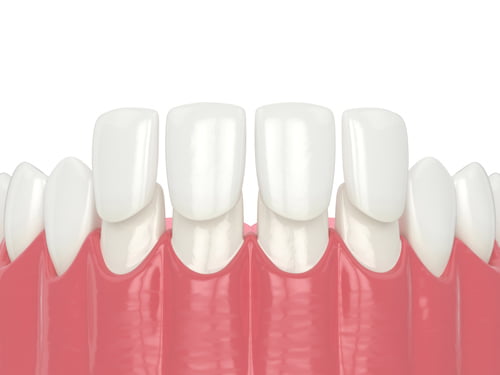
Porcelain veneers are ultra-thin, custom-made shells of dental porcelain that are permanently bonded to the front surface of your teeth. Each veneer is crafted to your exact specifications in shape, size, and colour, creating a natural-looking result that is virtually indistinguishable from healthy natural enamel.
Unlike dental crowns, which cover the entire tooth, veneers only cover the visible front surface. This makes the procedure minimally invasive, preserving most of your natural tooth structure. The porcelain material mimics the natural translucency and light-reflective properties of tooth enamel, which is why veneers look so realistic.
What Problems Can Porcelain Veneers Fix?
Veneers are most commonly used to address:
- Teeth that are severely stained or discoloured and have not responded to professional whitening
- Chipped, cracked, or worn-down teeth
- Mildly misaligned or crowded teeth where orthodontic treatment is not preferred
- Small gaps or uneven spacing between teeth
- Teeth that are too small or irregularly shaped
- Teeth with pitting or surface irregularities
Porcelain Veneers vs. Composite Veneers: What Is the Difference?
When researching veneers, you will encounter two main types: porcelain and composite resin. Both cover the front surface of the teeth, but they differ significantly in material, durability, appearance, and cost. Here is how they compare across the most important factors:
- Porcelain veneers: lab-crafted dental porcelain, fabricated by a professional dental laboratory
- Composite veneers: composite resin applied directly to the tooth during a single chairside appointment
- Porcelain veneers: 10 to 20 years with proper care
- Composite veneers: 5 to 7 years on average
- Porcelain veneers: highly natural result that mimics the translucency and light-reflective quality of tooth enamel
- Composite veneers: good aesthetic outcome, though generally less lifelike than porcelain under close inspection
- Porcelain veneers: excellent resistance to staining from coffee, tea, wine, and other pigmented foods
- Composite veneers: moderate stain resistance; composite resin can discolour over time with exposure to pigmented foods and drinks
- Porcelain veneers: 2 to 3 visits over one to two weeks
- Composite veneers: 1 visit in most cases, as the composite is applied and shaped directly on the tooth
- Porcelain veneers: not reversible, as a thin layer of enamel must be removed to create space for the veneer
- Composite veneers: partially reversible in some cases, though this depends on the individual situation
Who Is a Good Candidate for Porcelain Veneers in Pickering?
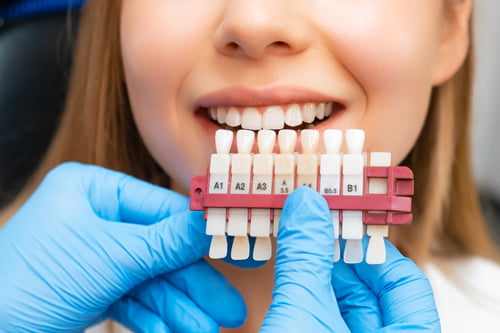
Porcelain veneers are an excellent option for most adults with good general dental health. During your consultation at Pickering Smile Centre, our dentists will assess whether veneers are appropriate for you. Ideal candidates generally share the following characteristics:
- Healthy gums with no active signs of periodontal disease
- Sufficient enamel on the teeth, as a thin layer, must be removed to place the veneer
- No unmanaged habit of grinding or clenching teeth; patients with bruxism can still be treated if a custom night guard is used
- Realistic expectations about the outcome of the procedure
Patients with severe misalignment, significant bite issues, or insufficient enamel may be better served by alternative treatments such as Invisalign, dental crowns, or composite bonding. Our dentists will clearly explain all your options at your consultation.
How Much Do Porcelain Veneers Cost in Pickering?
The cost of porcelain veneers in Pickering varies depending on the number of teeth being treated, the complexity of your case, and the specific materials used. In the Greater Toronto Area, porcelain veneers typically range from approximately $1,000 to $2,500 per tooth. This range is provided for general reference only, and individual quotes will vary based on your specific treatment plan.
Does Dental Insurance Cover Porcelain Veneers in Ontario?
In most cases, porcelain veneers are considered a cosmetic dental procedure and are not covered by standard dental insurance plans in Ontario. However, there are exceptions: if a veneer is required to restore a tooth fractured or damaged in an accident, a portion of the cost may be covered, depending on your specific policy.
We recommend contacting your insurance provider directly to confirm your coverage. Our front desk team can also assist you with this question at any time.
Flexible Financing at Pickering Smile Centre
We offer flexible payment and financing options to help make your smile goals achievable without financial stress. Our team will walk you through all available plans during your consultation so you can proceed with confidence.
The Porcelain Veneer Procedure: Step by Step
Getting porcelain veneers at Pickering Smile Centre typically takes two to three appointments spread over one to two weeks. Here is what you can expect at each stage of the process.
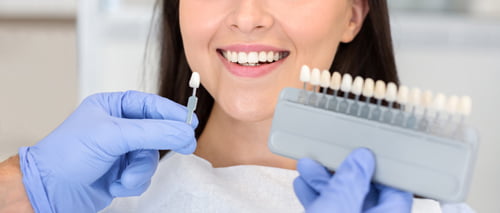
At your first appointment, one of our cosmetic dentists will examine your teeth, take X-rays if needed, and discuss your smile goals in detail. You will be shown what your results may look like and given a full treatment plan, including the timeline and cost. This consultation is completely free and carries no obligation.
A small amount of enamel, typically about 0.5 millimetres, is gently removed from the front surface of each tooth receiving a veneer. This step is performed under local anesthetic, also known as dental freezing, to keep you comfortable throughout. Impressions or a digital scan of your teeth are then taken and sent to our dental laboratory. In the meantime, temporary veneers may be placed to protect your teeth.
Your custom porcelain veneers are crafted by a professional dental laboratory to the exact shape, size, and colour specified during your consultation. This process typically takes one to two weeks.
At your final appointment, the temporary veneers are removed, and your permanent porcelain veneers are placed on your teeth to check the fit and appearance. Once both you and your dentist are satisfied, each veneer is permanently bonded to the tooth using a strong dental adhesive. A curing light is used to harden the bond instantly. Final adjustments are made to ensure your bite feels comfortable and natural.
How Long Do Porcelain Veneers Last?
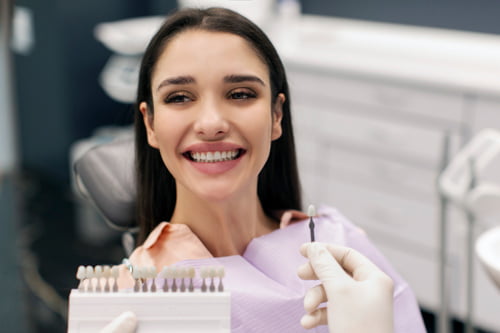
With proper care, porcelain veneers typically last between 10 and 20 years. The longevity of your veneers depends on your oral hygiene habits, whether you grind your teeth at night, and how well you follow your dentist's care recommendations.
When your veneers eventually need replacing, the process is straightforward and very similar to the original placement. Our dentists will guide you through your options when the time comes.
How to Care for Your Porcelain Veneers
Porcelain veneers require no special maintenance beyond your regular oral hygiene routine. To keep your veneers in the best possible condition:
- Brush your teeth at least twice daily with a non-abrasive toothpaste
- Floss daily, including carefully around the veneer margins
- Attend regular dental cleanings and check-ups at Pickering Smile Centre every six months
- Avoid using your teeth as tools or biting on hard objects such as ice, pens, or fingernails
- If you grind or clench your teeth at night, ask your dentist about a custom night guard to protect your veneers from excessive pressure
Frequently Asked Questions
The procedure is considered permanent because a thin layer of enamel is removed to create space for the veneer, and this enamel does not grow back. The veneers themselves are not permanent; they will eventually need to be replaced, typically after 10 to 20 years. Replacing old veneers is a straightforward process very similar to the original placement.
The preparation process involves removing a small amount of enamel from each tooth. While this is a minimal amount, approximately 0.5 millimetres, it is irreversible. The veneer then protects the prepared tooth surface. When properly placed and cared for, veneers do not harm the underlying tooth structure.
Decay can develop under veneers if oral hygiene is neglected, just as it can with natural teeth. However, when patients brush and floss regularly and attend routine dental check-ups, the risk of decay under veneers is not significantly different from the risk with natural teeth. Regular monitoring at your six-month dental visits helps ensure any early signs are caught and addressed promptly.
You can eat most foods normally with porcelain veneers. It is advisable to avoid biting directly into very hard foods such as whole apples, hard candies, or ice, as this can chip the veneer. You should also be mindful of heavily pigmented foods and beverages, although porcelain is significantly more stain-resistant than composite resin or natural enamel.
At Pickering Smile Centre, the full veneer process typically takes two to three appointments over one to two weeks. The first visit is for consultation and planning, the second is for tooth preparation and impressions, and the third is for bonding the final veneers. The exact number of visits depends on the complexity of your case and how many teeth are being treated.
Most dental insurance plans in Ontario classify porcelain veneers as a cosmetic procedure and do not provide coverage. In cases where a veneer is required to restore a tooth damaged by an accident or injury, partial coverage may apply depending on your specific policy. We recommend contacting your insurance provider to confirm your plan details, and our team is happy to help you navigate the process.
The procedure is performed under local anesthesia, so you should not feel pain during the tooth preparation. Some patients experience mild sensitivity in the days following the appointment, particularly when consuming very hot or cold foods and beverages. This sensitivity is temporary and typically resolves on its own within a few days.
Porcelain veneers cannot be whitened using teeth whitening products. The colour of the veneer is set during fabrication. If you are planning to whiten your natural teeth, it is recommended to complete the whitening treatment before your veneers are made so that the veneer colour can be matched to your newly whitened teeth.