Root Canal Treatment in Pickering

When a Root Canal Is Recommended, the Tooth Is Already at Risk

A root canal is not a preventive or optional procedure. It is recommended when the tooth's internal tissue, known as the pulp, has been irreversibly damaged by infection, deep decay, trauma, or structural compromise.
At this stage, the tooth can no longer heal on its own. Even if symptoms temporarily decrease, the underlying condition continues to progress.
What often confuses patients is that pain does not always correlate with severity. In some cases, a tooth may stop hurting because the nerve has already died, but the infection remains active and continues to affect the surrounding bone and tissues.
The purpose of root canal treatment is not simply to relieve discomfort. It is to stop the progression of a condition and preserve a tooth that would otherwise be lost.

What a Root Canal Actually Solves
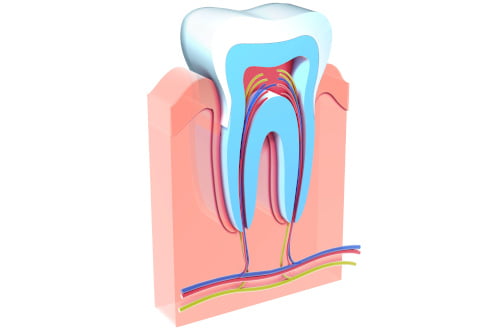
A responsible recommendation for root canal treatment is based on a detailed clinical evaluation rather than a single symptom or X-ray.
At Pickering Smile Centre, this decision is typically based on several key factors, including the extent of infection, the structural condition of the tooth, and the long-term predictability of the outcome.
Your dentist will assess:
- Whether the tooth has sufficient structure remaining to support a restoration
- Whether the surrounding bone is stable and can support the tooth long-term
- Whether the infection is localized or has spread beyond the root
- How your bite may affect the treated tooth over time
This evaluation is critical because not every tooth that can technically undergo a root canal will provide a reliable long-term result.
The goal is not simply to perform a procedure. It is to determine whether preserving the tooth is the most stable and appropriate option for your situation.
What a Root Canal Does In Practical Terms
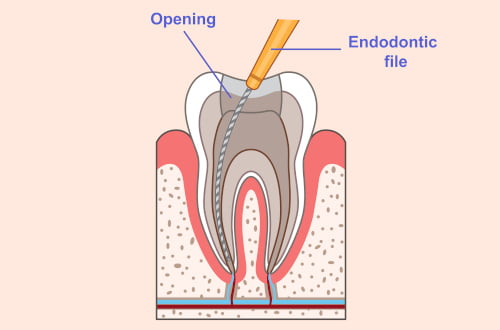
Many explanations focus on anatomy, but what matters to patients is the outcome.
A root canal removes the source of infection from inside the tooth while preserving its external structure. The infected or inflamed pulp is carefully removed, the internal space is cleaned and disinfected, and the canal system is sealed to prevent reinfection.
This allows the tooth to remain in place and continue functioning as part of your natural bite.
Unlike extraction, which removes the tooth entirely and requires replacement, root canal treatment is designed to preserve the stability of your existing oral structure.
In many cases, this makes it the most conservative long-term option available.
Root Canal vs Extraction:
Understanding the Difference
Patients often assume that removing the tooth may be the simpler or more definitive solution. In reality, this decision has broader implications.
| Factor | Root Canal Treatment | Tooth Extraction |
|---|---|---|
| Main goal | Preserve your natural tooth | Remove the damaged or infected tooth |
| Impact on surrounding teeth | No impact — neighbouring teeth remain intact | Neighbouring teeth may shift over time |
| Effect on bite | Maintains natural bite alignment | Bite can change due to a missing tooth |
| Bone preservation | Helps maintain bone structure | Bone loss begins after extraction |
| Need for additional treatment | Usually completed with a crown | Often requires an implant, a bridge, or a denture |
| Long-term complexity | One structured treatment with follow-up | Multiple stages of tooth replacement are needed |
| Cost over time | Typically more predictable | Can increase due to replacement procedures |
| Treatment focus | Preserve and stabilize the existing tooth | Remove the problem, but create a new gap |
Why Delaying Treatment Can Limit Your Options
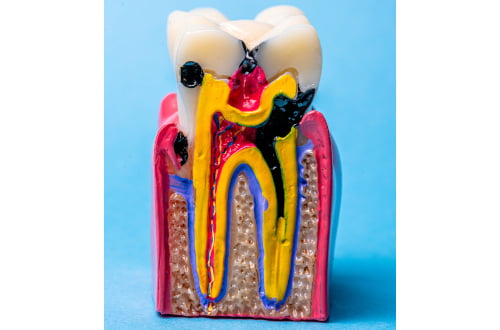
It is common for patients to delay treatment, especially when symptoms become less noticeable or intermittent. However, the underlying infection does not resolve on its own.
As time passes, several changes can occur:
- The infection may spread beyond the root into the surrounding bone
- The structural integrity of the tooth may weaken
- The tooth may reach a point where it can no longer be restored
When this happens, a root canal may no longer be possible, and extraction becomes the only viable option.
Addressing the issue earlier typically allows for a more predictable outcome and avoids more complex treatment later.
What Happens After the Procedure:
A Critical Part of Long-Term Success
Completing the root canal is only one part of the treatment process. What happens afterward plays a significant role in the long-term outcome.
Once the pulp has been removed, the tooth no longer has a blood supply, which can make it more brittle over time. For this reason, many teeth that undergo root canal treatment require a crown.
The purpose of the crown is to protect the tooth from fracture and restore its ability to handle normal biting forces. Skipping or delaying this step can significantly increase the risk of failure, even if the root canal itself was performed correctly.
How Long Does a Root Canal-Treated Tooth Last?
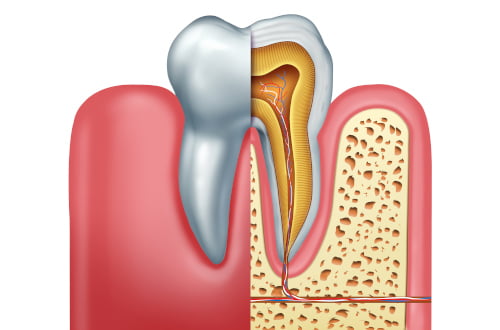
With proper care and appropriate restoration, a root canal-treated tooth can last for many years and, in some cases, for decades.
However, longevity is not determined by the procedure alone. It depends on several factors, including:
- The amount of remaining natural tooth structure
- The quality of the final restoration
- The forces applied to the tooth during daily use
- Ongoing oral hygiene and professional maintenance
A well-treated and properly restored tooth can function very similarly to a natural tooth over the long term.
Risks and Limitations:
A Clear and Honest Perspective
Root canal treatment is considered a safe and predictable procedure, but it is important to understand its limitations.
In some cases, challenges may arise due to:
- complex root anatomy that is difficult to fully clean
- microscopic cracks that are not visible during treatment
- reinfection if the seal is compromised over time
- structural weakness leading to fracture
These outcomes are relatively uncommon, but they highlight the importance of careful planning, proper restoration, and regular follow-up. A successful result depends not only on the procedure itself but on how the tooth is managed afterward.
Cost of Root Canal Treatment in Pickering
The cost of root canal treatment reflects the complexity of the procedure and the steps required to achieve a stable outcome. It typically includes:
- Diagnostic assessment and imaging
- The technical procedure of cleaning and sealing the canals
- Materials and equipment used during treatment
- The final restoration required to protect the tooth
Two cases may appear similar but differ significantly in complexity and long-term prognosis.
Financing Options Available
At Pickering Smile Centre, financing options are available to help make treatment more accessible. Payment plans can be arranged based on your treatment needs, and support is provided for both insured and uninsured patients.
The goal is to ensure that necessary treatment is not delayed due to financial concerns.
Why Patients Choose Pickering Smile Centre
Patients facing this type of decision are not just looking for treatment. They are looking for clarity and confidence in the recommendation. At Pickering Smile Centre:
Treatment decisions are based on detailed evaluation rather than assumptions
Options are explained clearly, including their long-term implications
Both immediate relief and long-term stability are considered
Patient comfort is supported with appropriate techniques and sedation when needed
The focus is not on performing a procedure quickly, but on ensuring that the chosen approach makes sense for your situation.
Book a Root Canal Consultation in Pickering
If you have been advised that you may need a root canal, the most important step is to understand your condition clearly before making a decision.
A proper consultation will help you determine:
- Whether the tooth can be predictably saved
- What the long-term outcome is likely to be
- What alternatives exist, and how they compare
At Pickering Smile Centre, consultations are structured to provide clear, practical answers so you can make an informed decision with confidence.
Book your appointment and take the next step with a clear understanding of your options.

Discover your perfect smile today
We take great pride in what we do, and how we do it. Together, we can navigate your journey to lifelong dental health. Let us help you bring out your happiest and healthiest smile!
Frequently Asked Questions
About Root Canal Treatment in Pickering
How can I be sure that my tooth can still be saved with a root canal?
This is determined through a clinical and radiographic evaluation. The dentist assesses the amount of remaining tooth structure, the condition of the root, and the level of bone support. If the tooth can be predictably restored and maintained under normal function, a root canal is a valid option. If structural damage or fracture compromises long-term stability, alternative treatment may be recommended.
If my tooth no longer hurts, does that mean I no longer need a root canal?
No. A reduction in pain often indicates that the nerve inside the tooth has lost vitality, not that the problem has resolved. Infection may still be present and can continue to progress without noticeable symptoms. Treatment is based on diagnosis, not on the presence or absence of pain.
Is removing the tooth a more reliable solution than a root canal?
Removing the tooth eliminates the infection but also removes the structure that supports your bite. This typically requires replacement with an implant or bridge to restore function. When appropriate, a root canal allows you to resolve the infection while preserving the natural tooth, which is often the more stable long-term solution.
What determines whether a root canal will be successful?
Success depends on accurate diagnosis, proper cleaning and sealing of the canal system, and appropriate restoration after treatment. Long-term outcomes are also influenced by bite forces, oral hygiene, and regular follow-up care. The procedure itself is only one part of the overall result.
Will I need a crown after root canal treatment?
In most cases, yes, especially for premolars and molars. After a root canal, the tooth becomes more susceptible to fracture due to loss of internal structure. A crown reinforces the tooth and allows it to function under normal chewing forces without breaking.
How urgent is it to proceed with a recommended root canal?
If an infection is present, treatment should not be unnecessarily delayed. The condition does not reverse on its own and may progress to involve the surrounding bone or lead to abscess formation. Early treatment increases the likelihood of preserving the tooth.
Can a root canal fail, and what happens if it does?
While success rates are high, failure can occur due to complex anatomy, reinfection, or structural issues. If a problem develops, the tooth can often be retreated or managed surgically. If the tooth is no longer viable, extraction may be necessary.
What are the actual risks associated with root canal treatment?
Risks are relatively low but may include incomplete cleaning of complex canal systems, reinfection if the seal is compromised, or tooth fracture over time. These risks are minimized with proper technique, planning, and restoration.
How long can a root canal-treated tooth realistically last?
With proper restoration and maintenance, many root canal-treated teeth function for decades. Longevity depends on structural support, crown quality, bite forces, and ongoing care rather than on the procedure alone.
What should I expect during my consultation?
You should expect a clear diagnosis supported by imaging, an explanation of whether the tooth can be predictably saved, and a discussion of all appropriate treatment options. The consultation should provide enough information for you to make a confident, informed decision.